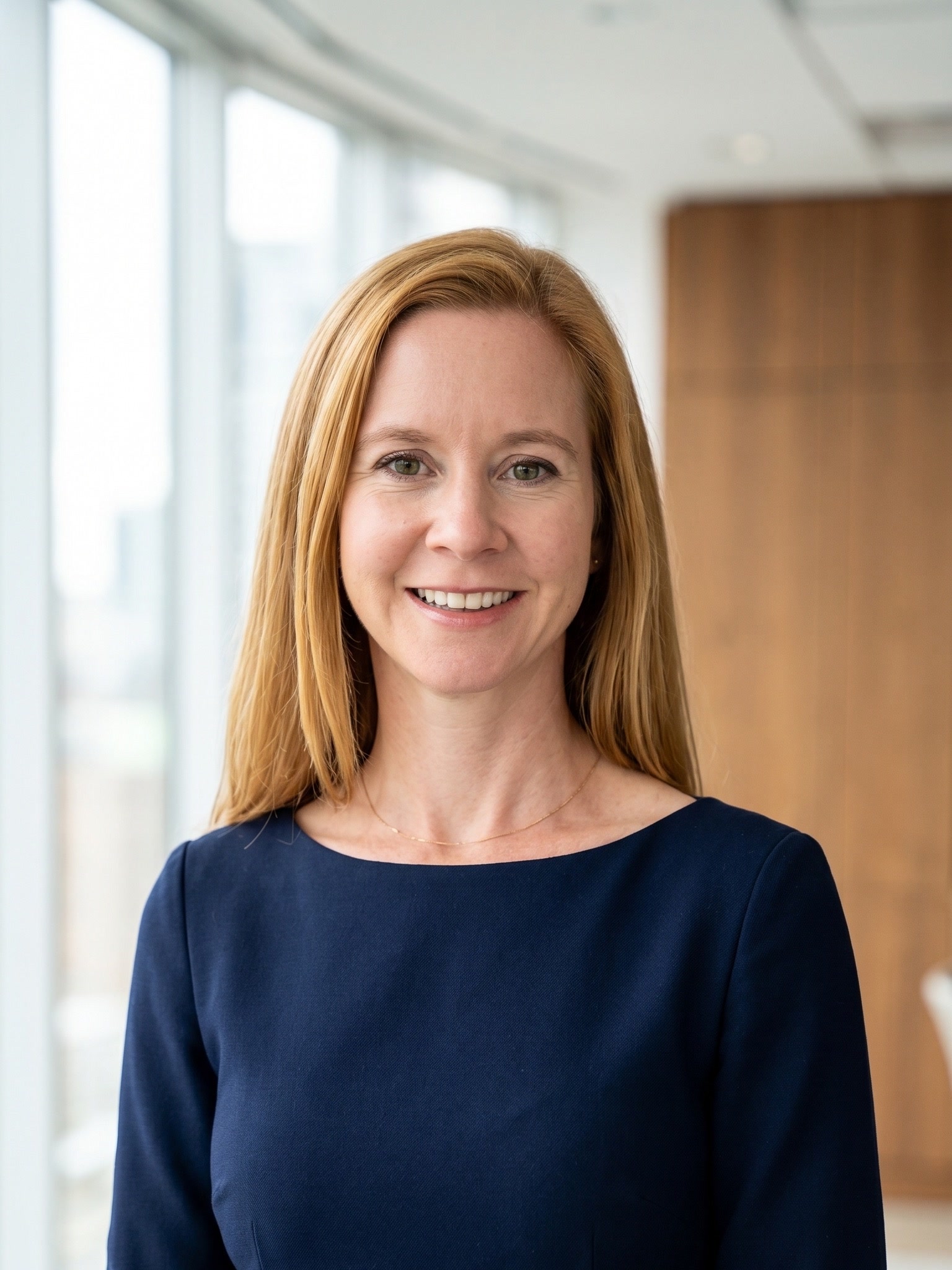
E-Commerce & Loyalty Director · KFC MENAPAKT · Dubai

Loyalty is a P&L problem before it's a points problem.

I turn owned channels into profit, and I get the people who have to pay for it to say yes. Here is the case I would bring to the first franchisee meeting.

Ramona Furter
CHF 100M+e-commerce P&L owned end to end at Ifolor
+9% / +15%conversion and checkout-step lift, test-and-learn
2 roundsfunding won as founding team by building the case

The case: winning the franchisee

Your ad says the job is to turn loyalty from a cost of doing business into a profit engine, and that franchisees decide whether to fund it. So the real work isn't a slide. It's making a franchisee say yes.

KFC Rewards, made worth funding: one franchisee, three moves

Worked example · illustrative figures

Today KFC Rewards is a flat points card, a large share of orders is rented from the aggregators, and your master franchisee Americana already holds the app, the platform and roughly 15 million customer profiles. Answer the three objections a franchisee will actually raise, and watch the room move.

Franchisee stance Not sold yet
Today

KFC Rewards earns a flat 10 points per 1 AED, with no tiers and no birthday reward, and points expire after 180 days. Americana already holds ~15M unified customer profiles across its brands.KFC Rewards published terms; Americana Integrated Annual Report 2024.

The move

Tiering and personalization built on the profiles Americana already owns. It costs strategy, not a new platform: the data is sitting idle behind a flat card.

The answer to the objection

You own the asset; today it earns everyone the same coupon. Tiering plus personalization is exactly what McDonald's identical points mechanic can't do and what Starbucks already runs in-market. Recognition and status, not just discounts.

Illustrative: lift the top decile of ~15M profiles by even +1 visit a month and the frequency gain compounds fast. Prove it in one market before the region funds the rest.
Today

KFC sells in parallel through Talabat, Deliveroo and Careem. Operators report aggregator commissions of roughly 20 to 35% of the order, so after commission a delivered order earns close to breakeven against dine-in. And the aggregator keeps the customer and the data.Commissions: industry estimates (aggregators don't publish rates). Talabat held an estimated 70%+ of UAE delivery, Statista 2021.

The move

Not a fight, a front door. Make the owned app the default place to order, pay and earn, and shift a slice of the orders you already win onto it.

The answer to the objection

Same customers, better economics. You don't leave the aggregators; you stop being a stranger to your own buyers. Every order that moves to the app keeps the commission and the first-party data.

Illustrative, anchored to the 20 to 35% commission band: the margin recaptured per shifted order is the commission you stop paying. State the shift assumption openly and prove it in one market first.
Today

QSR app retention is thin: industry data puts roughly 11% of users still active after 10 weeks. Points today largely reward people who would have bought anyway.Sensor Tower QSR app report, 2025 (US retention benchmark).

The move

Redirect the spend. A win-back lifecycle on lapsed members (RFM and recency triggers) puts points where they change behaviour, not where they subsidise it.

The answer to the objection

More loyalty is only more cost if you keep discounting the base. Aim points at lapsed members who need a reason to return, and every point buys incremental frequency you can measure.

Illustrative: reactivate a defined lapsed segment at a target rate, measured closed-loop against a holdout, so the spend proves itself before it scales.

What I would not ask you to fund

Buying loyalty with margin.

Richer points and deep discounts look like momentum, and mostly train your best customers to wait for a deal. Loyalty has to pay for itself in incremental margin, or it's just a coupon with a login. A me-too paid tier like Talabat Pro fails the same test, so it waits.

Recommendation to Americana

Fund moves 1 to 3 in the UAE first, on app maturity (4.4 star app). Prove the frequency and margin lift in one market, then take the funded model to KSA and Egypt. Verdict: fund, with conditions.Answer the three objections above to win the room.

How this was built. Ramona designed and built this page, the case and the research behind it with the AI toolchain she'd bring to the team (Claude Code), the same stack she used to build her cycling platform Pedal Peak end to end. The medium is part of the pitch.

Why me for this role

Three points, each naming your problem first, then the proof.

1

You need loyalty turned into a profit engine, and a business case a franchisee will fund.

That's the job I've done. I owned a CHF 100M+ e-commerce P&L at Ifolor reporting to C-level and lifted conversion +9% and the checkout step rate +15% with research and A/B testing. Before that I won two funding rounds as a founding team at WePractice by building the commercial case and selling it. Turning a channel into profit, then getting it funded, is my core.

2

You need owned channels that pull customers back from the aggregators.

I've run the owned-channel playbook: e-commerce ownership with UX, merchandising and conversion discipline at Ifolor, and go-to-market across unfamiliar models at Sparrow Ventures that lifted conversion and cut CAC. My grounding is FMCG consumer frequency and promotion economics (Domaco, Cruspi, Promena), which is what a QSR loyalty P&L actually runs on.

3
The honest read

You ask for a deep loyalty-programme-scaling track record.

Straight answer: I haven't operated a QSR loyalty stack at KFC's scale, and I won't pretend otherwise. Here's why I still fit. Americana already owns the platform, its 18 SuperApps and the ~15M customer profiles, so MENAPAKT doesn't need someone who has personally run one. It needs the strategist who wins franchisee buy-in and makes the economics work. That's my lane. And I ship the AI personalization myself: AI-driven business models at Swiss Post today, and Pedal Peak, a live product I built end to end with real users. I'd lean on Americana's team for programme operations and own the strategy, the case and the numbers.

The career behind it

Accounting discipline to FMCG product marketing to venture building to e-commerce P&L to AI. The full CV is one click away.

AI Project Lead, Business Development

Swiss Post, Advertising · Zurich
since Jan 2026

Leads AI-driven business models from opportunity sizing to a prioritised roadmap with KPIs; turns AI ideas into go-to-market plans and new revenue, with build-vs-buy and cost-vs-benefit calls from concept to launch.

Senior Product Manager, Lead E-Commerce

Ifolor Group · Zurich
Oct 2024 to Jul 2025

Owned the e-commerce ecosystem and strategy for a CHF 100M+ business, reporting to C-level. +9% conversion, +15% checkout step rate via research, A/B testing and analytics. Led a cross-functional team and external agencies; owned budget, resourcing and KPIs.

Marketing & Growth Lead, Founding Team

WePractice (Sparrow Ventures / Migros Group) · Zurich
2019 to 2023

Built and scaled a health venture inside Sparrow Ventures: two funding rounds closed, grown to 10 locations, 23 people, 170+ customers, with a full hypothesis-and-data go-to-market (1000+ client matches in year one). Ran venture building across several internal startups, from validation to scale-up.

Lead Project Manager

Brixel · Zurich
Jun 2023 to Sep 2024

Owned partnerships with financial institutions (UBS, Baloise) that drove growth, and was the main bridge between senior client stakeholders and the internal product team.

Intrapreneur, Innovation

Die Mobiliar · Bern
Jan 2017 to Aug 2019

Took market pilots from MVP to launch (Smide, now BOND Mobility; XpertCheck; Lizzy); ran market experiments that steered product and marketing, and briefed and managed external agencies.

Earlier: FMCG product and trade marketing across Promena, Cruspi and Domaco, 2010 to 2016: own brand portfolios, promotion planning and consumer frequency economics. Started in accounting at Kuoni and AMAG, 2008 to 2010. Full detail in the CV.

Why Dubai, why this, why now

The move to Dubai is a committed plan, made with my partner, not a maybe. So this isn't a role I'm curious about from afar. It's the market I'm building my next chapter in.

And the shape of the job fits how I actually work: take something treated as a cost, prove it can be a profit engine, and get the people who hold the budget to back it. I've done that with e-commerce and with a startup that had to raise to survive. Doing it for a brand as loved as KFC, in a region moving this fast, is the part I'd get up early for.